Lincoln Electric logo

Field services

Lincoln Electric Support From Joint Review to Cell Release

Application work starts with evidence: material specification, thickness range, joint geometry, weld position, filler classification, shielding route, input power, cycle demand, applicable code, and the acceptance method. That record makes equipment selection auditable and gives operators a common setup reference.

The service scope below describes a review path, not a promise that one trial covers every production condition. Surface condition, fit-up, cable length, ambient temperature, operator technique, and upstream part variation can move the usable window.

Application engineer reviewing weld procedure beside a fabrication cell

Four review gates

Define What Must Stay Controlled

01

Joint and code intake

Record base-metal grade, thickness, joint preparation, position, backing, inspection route, and the governing WPS, AWS, ASME, ISO, or customer specification. If a qualified procedure already exists, the equipment review stays inside its essential-variable limits.

02

Process and consumable fit

Compare GMAW, FCAW, GTAW, and SMAW against access, deposition demand, cleanliness, wind exposure, skill requirement, and defect sensitivity. Wire or electrode classification, diameter, polarity, and shielding gas remain part of the system—not afterthoughts.

03

Power and duty review

Check available voltage, phase, branch protection, extension length, output range, rated duty cycle, feeder arrangement, and expected arc-on interval. A nameplate rating without the stated test condition is not enough to release a cell.

04

Trial and handoff

Run a representative coupon, capture voltage, current, wire-feed speed, travel speed, gas flow, torch angle, and interpass condition, then inspect by the agreed method. Approved settings become a controlled starting window for production.


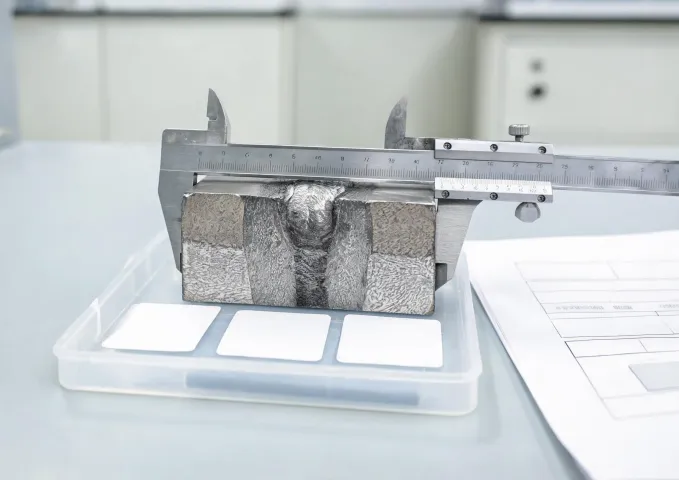
Macro inspection of a welded steel coupon

Representative verification

A Coupon That Mirrors the Risk

A thin cosmetic panel, a multipass structural groove, and an outdoor repair should not share the same demonstration. The coupon should reproduce the critical joint orientation, heat sink, access, and restraint. Visual examination may be sufficient for a setup screen; code work can require bend, macroetch, radiography, ultrasonic testing, or another specified method.

Results remain conditional. A passing coupon does not cover untested thickness, changed filler classification, different shielding gas, altered polarity, or a production fixture that changes heat flow. Those boundaries belong in the handoff record.

Technician documenting welding feeder and cable setup

System, not box

Trace the Entire Delivery Path

Unstable feeding can look like a power-source problem. The review follows spool condition, drive-roll type and pressure, inlet guide, liner size, contact tip, gun length, work lead placement, gas delivery, and grounding. Each check has a visible condition or measurement, which makes the troubleshooting sequence repeatable.

Long leads, restricted airflow, dust, high ambient temperature, and generator input can reduce available performance. Maintenance access and consumable availability therefore carry the same weight as nominal output when a machine is selected for field work.

8intake variables
6delivery-path checks
1representative coupon
0unrecorded changes

Prepare the review

Send the Variables That Define the Work

Include a drawing or joint sketch, material and thickness range, current WPS when available, position, output target, incoming power, consumable preference, inspection method, and the production constraint you are trying to solve.

  • No invented performance estimate before the application is defined.
  • No substitution for the applicable procedure qualification or local code.
  • No release beyond the conditions demonstrated by the trial.