Lincoln Electric logo

Industry application matrix

Lincoln Electric Welding Equipment by Production Condition

Sector names alone do not select a welder. The decisive inputs are the joint, material, thickness, position, environment, code, deposition target, inspection method, and available service.

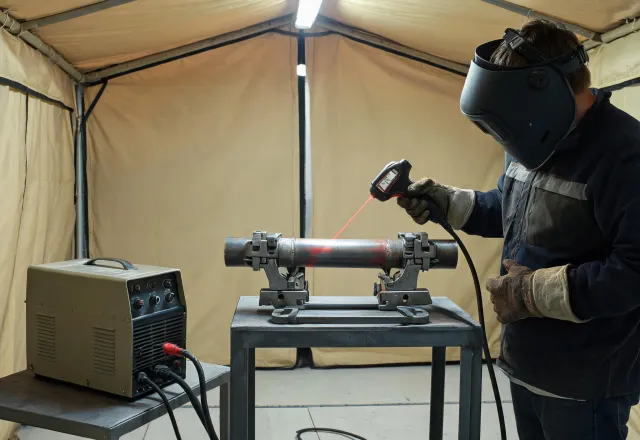
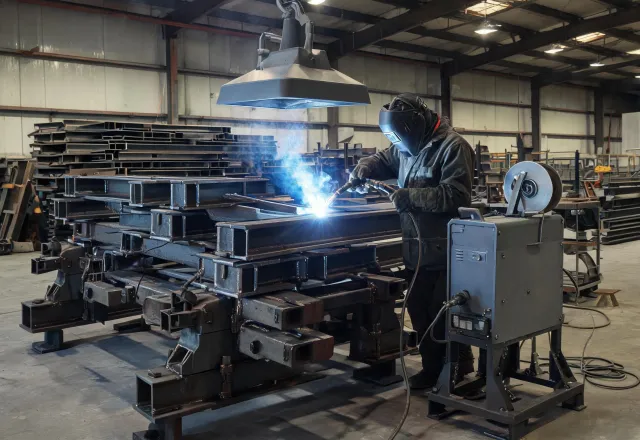
MIG welding structural fabrication fixturesFabrication

Variable fit-up, repeated assemblies

GMAW and FCAW can support high deposition, but gap variation, mill scale, restraint, wire delivery, and rework criteria determine the practical window. A fixture change can alter heat flow and should be included in the trial.
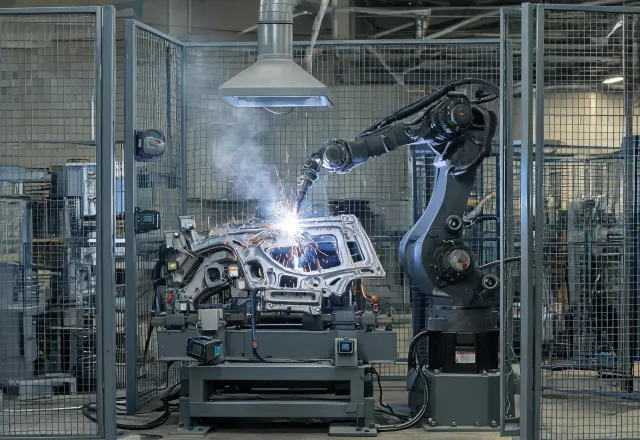
Robotic welding automotive assembliesAutomotive

Cycle time with controlled presentation

Automation reduces motion variation only when part location, contact-tip-to-work distance, torch geometry, seam tracking, consumable condition, and cleaning remain controlled. A fast cycle does not compensate for inconsistent incoming parts.

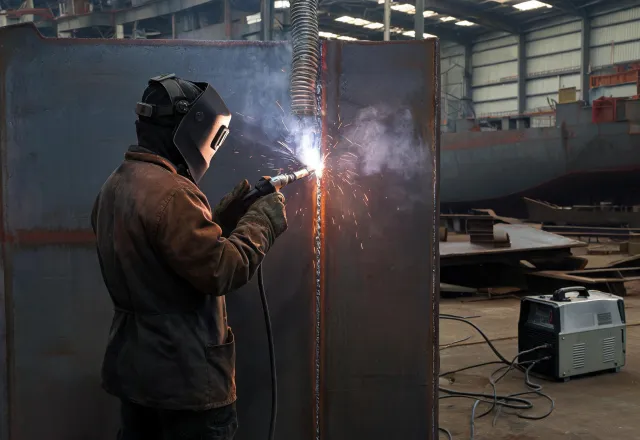
Shipyard welder joining thick steel plateShipbuilding

Position, access, and long-shift demand

Vertical and overhead joints, long cables, confined access, and outdoor exposure affect process choice. Feeder portability and maintenance access may be more important than maximum bench output.

Pipeline welding qualification couponEnergy and pipeline

Procedure boundary and traceability

Root, fill, and cap strategy follow the qualified procedure. Preheat, interpass temperature, consumable control, polarity, position, and inspection acceptance must be recorded at the same revision level.

Technical trade-offs

Choose a Method by Constraint, Not Habit

No process wins every comparison. GMAW offers feed continuity but needs stable gas coverage; FCAW can raise deposition but introduces slag and fume considerations; GTAW provides precise heat control at lower deposition; SMAW travels well but depends heavily on electrode handling and operator technique.

DecisionUseful directionBoundary to verify
Thin sheet and appearanceControlled short-arc GMAW or pulsed GTAWBurn-through, distortion, surface condition, gas coverage
Structural shop depositionGMAW or FCAW with matched feederDuty cycle, wire path, joint position, fume extraction
Outdoor field repairSMAW or self-shielded FCAWWind, moisture, electrode storage, lead length, generator quality
Stainless or aluminum precisionGTAW or pulsed GMAW after a coupon trialCleaning, oxide control, filler, heat input, shielding purity

Three explicit limits

Published output does not prove acceptable weld quality; nameplate duty cycle is tied to a stated test condition; and a successful coupon does not authorize changes outside the material, thickness, filler, gas, polarity, joint, or position demonstrated. Production release remains subject to the governing WPS and inspection plan.

Build the trial around the risk

Map Your Joint to a Verification Plan

Send the drawing, base-metal specification, thickness range, position, annual mix, power service, code, and acceptance method. We will organize the questions that must be answered before equipment selection.