Company foundation
John C. Lincoln founded the company in Cleveland. The milestone establishes the corporate starting point; it does not substitute for a current model manual or regional compliance record.
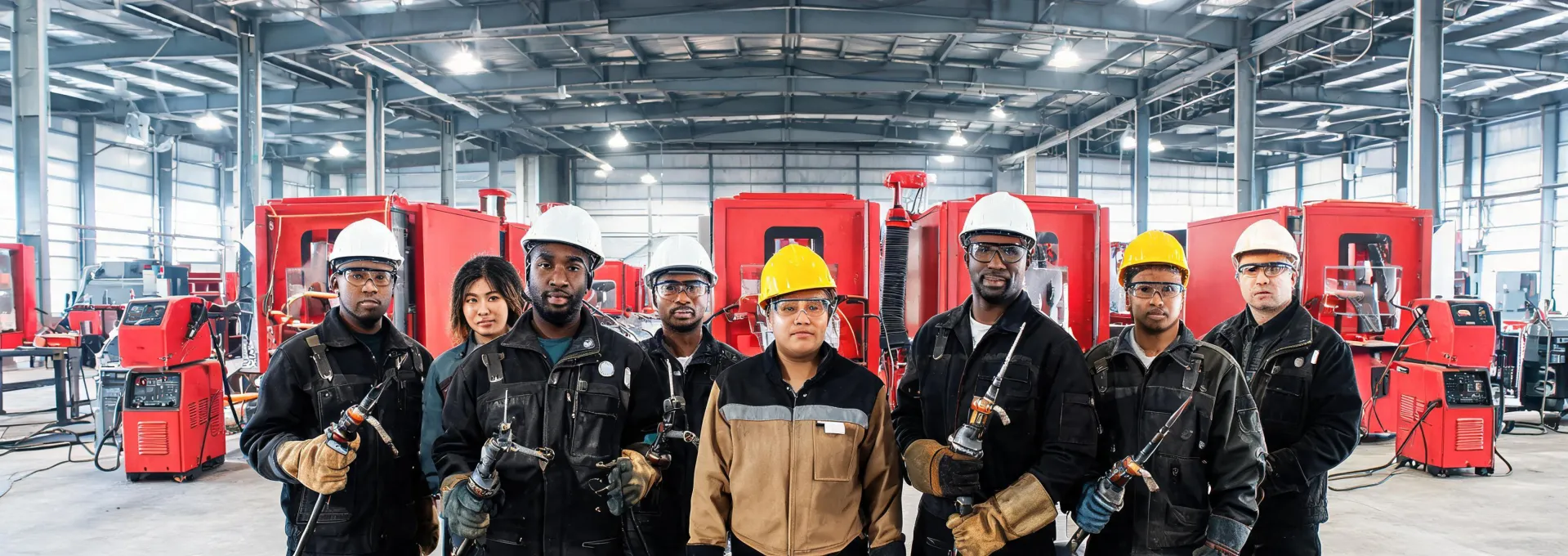
Industrial heritage, documented practice
A welding organization earns continuity by turning field experience into procedures, training, service records, and equipment decisions that another team can examine.
Evidence timeline
Lincoln Electric was founded in 1895 in Cleveland, Ohio. The dates below are used as public historical anchors, not as proof that every current product shares the same design or certification.
John C. Lincoln founded the company in Cleveland. The milestone establishes the corporate starting point; it does not substitute for a current model manual or regional compliance record.
James F. Lincoln joined the business as electric welding developed into a practical industrial discipline. Application knowledge became inseparable from the equipment used to create the joint.
Published welding guidance and hands-on education helped standardize how operators discussed electrodes, joint design, position, and technique. A training reference still needs to be checked against the current code and product documentation.
The working scope spans power sources, wire feeding, consumables, extraction, automation interfaces, and process support. The appropriate combination remains application-specific and must be verified at the stated operating condition.
Output, duty cycle, material range, and environmental suitability are meaningful only with test conditions. We distinguish a documented rating from a result that still requires application qualification.
Power source, feeder, gun, lead, gas, filler, base metal, fixture, operator, and inspection route form one process chain. Troubleshooting begins by recording each link.
A representative coupon, measured parameters, inspection result, and approved procedure provide a handoff that production, quality, and maintenance can all use.
Role clarity
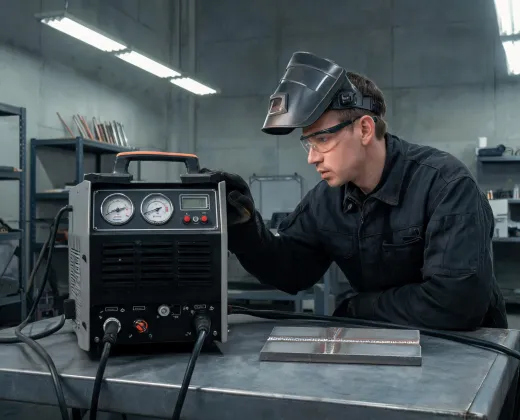
Translates the joint, code, power, and productivity requirements into a trial plan and a bounded equipment shortlist.
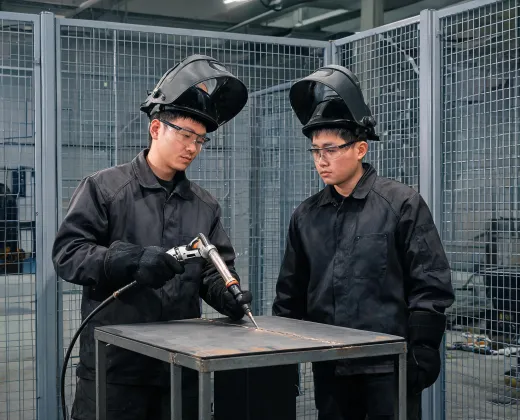
Connects settings to torch manipulation, starts and stops, interpass control, defect recognition, and safe work practice.
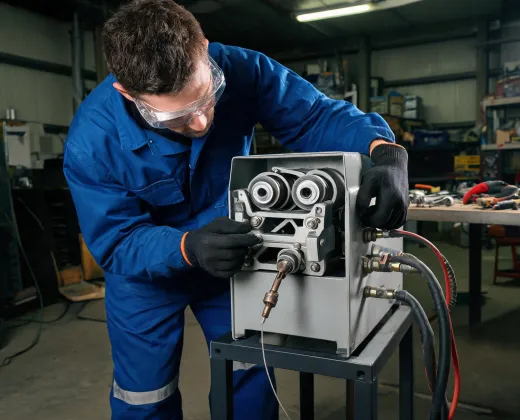
Separates maintenance conditions from process variables and records the corrective path before production resumes.
Common references can include AWS structural codes, ASME Section IX, ISO 9606, IEC 60974, CE marking requirements, UL listings, CSA requirements, and employer safety programs. Applicability varies by equipment model, destination, joint, and contract. Confirm the current declaration, listing, procedure qualification, calibration status, and revision rather than relying on a decorative badge.
Provide the destination market, equipment model, process, joint, and governing specification. The useful response is the current document or verification route—not an unsupported universal claim.
Contact the Application Desk